basetao Training Shoe Durability Guide
basetao Training Shoe Durability Guide
basetao Training Shoe Durability Guide
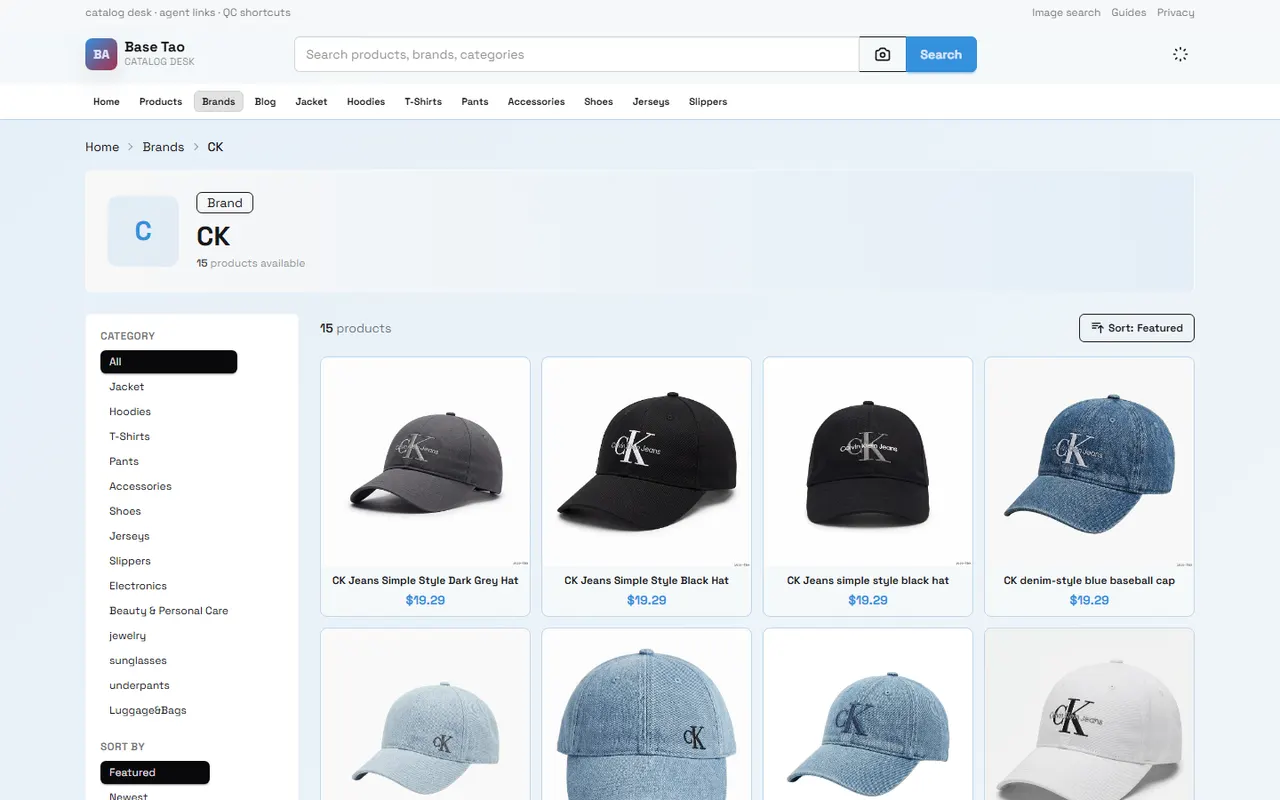
Image: Example of base-tao directory page, used to observe platform categories, product names, and basic price information.
Whether a training shoe is durable cannot be judged solely by words like "wear-resistant," "stable," or "professional" in the product title. What truly affects long-term value is usually your training frequency, movement type, ground surface, outsole coverage, upper fastening method, and cleaning and replacement costs.
The specific question this article aims to solve is: when you see a training shoe on base-tao.com, how can you judge whether it suits your training intensity without long-term wear data? After reading, you should be able to record evidence from product pages, identify high-risk wear areas, and decide whether to keep, further verify, or discard a candidate.
This article does not apply to situations requiring medical-grade orthotics, confirmed foot condition adaptations, professional competition certification, or already experiencing severe pain. Product page images and text can only help with screening; they cannot replace professional assessment, nor can they prove exactly how long a particular shoe will last.
First Determine Training Frequency and Main Movements
Don't start by asking "how long will these shoes last?" Instead, write down how you use them each week. Wearing them once a week, five times a week, or multiple sessions daily will put completely different wear stress on the same pair.
First, record four pieces of information:
Weekly wearing frequency and duration per session
Main training movements, such as strength training, jumping, sprinting, lateral movement, or mixed training
Indoor rubber flooring, wooden floors, concrete, track, or mixed outdoor surfaces
Whether the training shoes will also be used for commuting, daily walking, or travel
If mainly used for machine training and low-impact strength work, local outsole wear may be slower, but upper fastening, heel stability, and outsole flatness remain important. If involving jumping, shuttle runs, and lots of lateral movement, outsole edges, forefoot flex zones, and upper sidewalls will bear more repetitive stress. 🏋️
A simple usage intensity classification is as follows:
Usage Intensity | Typical Scenario | Key Observation Areas |
|---|---|---|
Low | 1–2 times per week, mainly machines or light training | Outsole flatness, heel fastening, cleaning difficulty |
Medium | 3–4 times per week, including squats, jumps, or short-distance movement | Forefoot flex zone, outsole tread pattern, upper connection points |
High | 5+ times per week, with significant lateral movement or outdoor use | Outsole edges, toe cap, upper support panels, stitching and bonding areas |
This is not a durability guarantee, but a way to help you decide how deeply to verify. The higher the training frequency, the less you should rely solely on appearance and promotional words.
Distinguish Outsole Coverage, Upper Fastening, and Wear-Prone Areas
The durability of training shoes is usually determined by multiple parts together. Outsole wear resistance does not equal overall shoe durability; if the upper loosens first, the heel collapses, or the midsole loses support, even intact outsole tread does not mean the shoe is still safe to use.
First look at outsole coverage. Confirm whether rubber or other wear-resistant material covers the forefoot, heel, and lateral edges. If the midfoot or sidewalls have large exposed soft foam, lateral movements and pivoting may wear these areas faster. Deep outsole tread does not necessarily mean longer life; also observe whether the tread is continuous and whether there are obvious weak connection points.
Then look at upper fastening. Eyelets, overlays, heel cup, and lateral support structures determine whether your foot slides during movements. If the images only show mesh but do not clearly show the eyelet area, toe cap connection, or heel structure, mark the durability judgment as pending verification rather than directly concluding it is durable.
Also pay attention to wear-prone areas:
Forefoot flex line: repeated bending from frequent jumping, squats, and sprints
Toe cap: wear from toe jamming, dragging, or outdoor walking
Outsole edges: increased scraping from lateral movement and pivoting
Upper-midsole connection: may crack first if gluing or stitching quality is insufficient
Heel lining: more prone to damage with frequent on/off, oversized fit, or heel slippage
If the product page does not show these areas, the safest approach is to lower the evidence level. 📌
Record Durability Clues from Product Page and Visible Images
base-tao.com's public directory information can help you confirm product names, categories, and page existence, but the directory page alone is usually insufficient to prove the long-term life of a shoe. The currently visible platform directory includes a Shoes category, and the platform states its services are aimed at Chinese products and customized procurement; this only indicates the existence of a shoe category and platform purchasing scenario, and cannot infer the material, inventory, quality, or durability of a specific training shoe.
Therefore, when screening, divide product page evidence into three layers.
First layer is directly confirmable information: product name, visible sizes, colors, images, labeled materials, page price, and page update time. Price, inventory, and size are highly volatile and should be re-verified before placing an order. The verification date for this article is October 1, 2026, and no specific product price or inventory is considered valid long-term.
Second layer is observations supported by images: whether the outsole covers to the edges, whether the upper has additional support panels, whether the heel has independent structure, whether the outsole shows obvious segmentation. Images can only support "what the page shows," not "what will definitely happen after wearing for a period."
Third layer is information needing additional confirmation: rubber hardness, sole thickness, actual weight, upper stitching strength, bonding method, return/exchange conditions, and pre-shipment inspection scope. If the page does not state these, record them as unknown rather than filling in with common industry impressions.
It is recommended to save the following verification records:
Product page title and page screenshot
Visible size chart and applicable foot length instructions
Clear images of outsole, toe cap, sidewalls, and heel
Material, weight, and structure descriptions
Price, inventory, and verification date shown on page
Questions to confirm with seller or purchasing service
Do not enlarge blurry product images and treat them as test results, nor rewrite promotional language into factual conclusions. 🔍
Judge Wear Risk by Ground Type
Ground is an important variable in assessing wear risk. The same outsole may wear at different rates on indoor rubber flooring versus rough concrete, so you cannot evaluate sole life without considering the usage environment.
Indoor rubber flooring is generally gentler than rough outdoor surfaces, but dust and cleaning agent residue can affect grip. Wooden floors require attention to whether the sole is likely to leave marks and whether there is instability at the edges during pivoting. Concrete, asphalt, and rough brick surfaces increase sole abrasion, especially on the forefoot and lateral edges.
If your training includes both indoor and outdoor use, it is recommended to split shoes into primary training shoes and backup shoes, rather than assuming one pair can cover all scenarios. Short outdoor use may not cause immediate visible damage, but it increases cleaning frequency and uncertainty of sole wear.
When judging, ask yourself:
Does the outsole tread cover your most frequently stressed areas?
Do the outsole edges sufficiently protect the upper and midsole connection?
Is the sole suitable for the target ground, not just the visual effect in product images?
After sole wear, will it affect stability or grip, not just appearance?
If the page does not clearly label applicable ground, do not automatically assume "training shoes" are suitable for all training environments.
Include Cleaning, Replacement, and Idle Costs in Comparison
Long-term value is not just purchase price minus number of uses. Also consider cleaning time, cost of replacing insoles or laces, shipping costs, return/exchange costs, and idle costs if the shoes are not suitable for the current ground.
A simple estimation method:
Long-term usage cost = product price + related delivery costs + maintenance and replacement costs + expected idle loss
Cost per training session = long-term usage cost ÷ estimated effective training sessions
Here, "estimated effective training sessions" is not a platform guarantee, but your conservative estimate. For products with insufficient evidence, use a lower estimated number; for products with more complete structural and material information that match your training scenario, a relatively reasonable estimate can be used.
For example, two shoes with similar prices, but one requires frequent cleaning and can only be used indoors, while the other can cover your main training surfaces, the latter may be more convenient. However, if the latter has unclear sizing, uncertain return conditions, or insufficient upper structure evidence, the lower sticker price may not result in lower real cost.
Consolidated shipping also needs to be included in the calculation. Consolidated shipping may reduce repeated first-weight or handling costs, but increases package value, volumetric weight, or single-loss risk; split shipping may increase fixed costs but may adapt to route restrictions or reduce per-package loss. Do not treat whether to combine training shoes with other goods as a fixed answer; calculate separately based on package weight, declaration information, destination country rules, and acceptable risk. 📦
Which Promotional Words Cannot Prove Actual Lifespan
The following words can serve as clues for further verification but cannot alone prove durability:
Wear-resistant
Professional training
Thickened sole
Stable support
Anti-slip
High strength
Lightweight and durable
Suitable for gym
What is truly useful is verifiable information behind the promotional words, such as whether outsole material is specified, whether key areas have structural diagrams, whether the sole covers the sides, whether sizing and return conditions are clear, and whether the page provides sufficient detail images.
If there are only exaggerated adjectives without material, structure, size, or usage scenario descriptions, mark the product as a low-evidence candidate. Do not use conclusions like "guaranteed durable," "definitely non-slip," "authentic," "best," or "trustworthy" that cannot be supported by current evidence.
Build a Training Shoe Long-Term Value Checklist
Before ordering, complete the following checks in order:
Clarify weekly usage frequency, session duration, and main movements
Record target ground and whether outdoor use is mixed
Check whether outsole covers forefoot, heel, and lateral edges
Check upper fastening, heel structure, and toe cap connection
Record visible materials, sizes, prices, and verification date on product page
Mark areas in images that cannot be confirmed
Confirm whether seller needs to provide additional images or size information
Estimate cleaning, replacement, shipping, and return costs
Examine impact of consolidated vs split shipping on costs and risks
Keep backup candidates for products with insufficient evidence
A three-tier decision can be used:
Keep: evidence covers major wear areas, and applicable ground and training movements match.
Pending verification: product looks suitable, but lacks outsole material, structural details, or size information.
Discard: main stress areas do not match, page information too scarce, or total cost approaches a more reliable alternative.
Decide Whether to Keep Candidates Based on Usage Intensity
Low frequency, low impact, indoor users can prioritize fit, stability, and easy cleaning, without paying extra for exaggerated wear-resistant claims. Medium frequency trainers should focus on verifying outsole edges, forefoot flex zones, and upper fastening. High frequency trainers or those doing frequent lateral movements should put structural evidence, ground suitability, and replacement costs ahead of price.
The final judgment can be summarized in one sentence: first define wear risk by movement frequency and ground type, then use outsole coverage and upper structure to filter out high-risk candidates, and finally add maintenance, shipping, consolidated shipping, and return costs to the cost per training session.
Savings mainly come from reducing mismatched purchases, lowering unnecessary replacements, and avoiding extra costs due to improper consolidated shipping; the risk is that without long-term wear data, any lifespan estimate may be optimistic. This method suits buyers who want to control budget and are willing to save evidence and verify details before ordering. It is not recommended for those needing professional foot support, strict competition compliance, or who cannot accept trial-and-error costs; when sizes, structure, returns, or applicable scenarios cannot be confirmed, keep candidates rather than ordering directly.
Agent Platform Shopping FAQ
1. What steps should I take on base-tao.com if the product I received doesn't meet my expectations?
For any dissatisfaction with your purchase, reach out to base-tao.com's customer service without delay. Most non-specialty items sold by Chinese merchants include a 5-day no-questions-asked return and exchange window, so you can file a return request. If the order has already been delivered and you find a quality problem, contact base-tao.com's support team to assist in negotiating a compensation plan with the merchant.
Customer service email addresses for other platforms are listed below:
kakobuy: [email protected]
oopbuy: [email protected]
usfans: [email protected]
hipobuy: [email protected]
superbuy: [email protected]
Browse our latest products and find your next favorite item.