basetao Shoe Care Kit Spreadsheet Guide
basetao Shoe Care Kit Spreadsheet Guide
basetao Shoe Care Kit Spreadsheet Guide: Filter by Upper Material, Stain Type, and Tool Safety
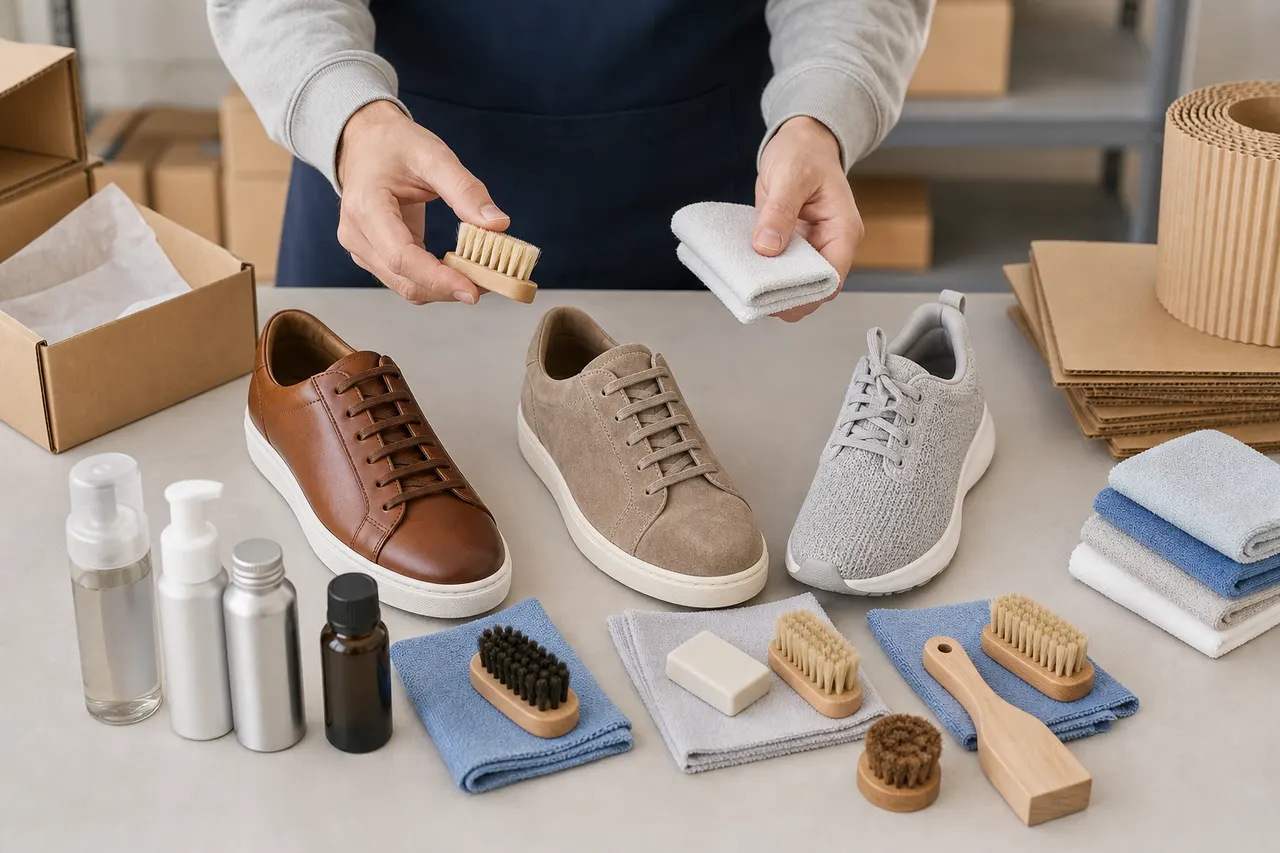
The purpose of a shoe care kit spreadsheet is to help buyers organize candidate products, not to replace product page verification or prove cleaning effectiveness. This guide addresses a specific problem: how to screen care products worth further inspection from basetao-related candidates based on upper material, stain type, and tool safety.
After reading, you can build a purchase list that includes cleaning agents, brushes, wiping tools, risk markers, and fields to verify. This article does not apply to shoes that are already cracked, peeling, severely oxidized, stained by dye transfer, or need professional repair, and it cannot judge whether chemical ingredients are safe based on images.
Information verification date: August 27, 2026. Product prices, inventory, capacity, kit contents, shipping restrictions, and page status may change. Before ordering, please rely on the product and order information displayed on base-tao.com at the time.
First Define the Care Task Based on Upper Material
Don't start by searching for the "strongest cleaner"; first confirm what material the upper is. The same shoe may also include mesh, synthetic leather, suede, rubber, and glued decorations, and the cleaning plan should follow the most fragile part.
First add the following fields to the spreadsheet:
Main upper material
Spliced or decorative materials
Sole material
Color and whether it is prone to color bleeding
Whether the product page clearly states applicable materials
Whether the product page lists non-applicable materials
Whether a small-area test is needed first
Smooth leather usually requires gentle cleaning and less moisture; mesh requires more control over brushing force and drying method; suede, nubuck, and brushed leather are more sensitive to moisture and brush direction; patent leather, coated leather, and printed uppers should be wary of solvents, alcohol, and strong friction.
If a seller only writes "suitable for all shoes" without material range, usage instructions, or restrictions, it should be marked as insufficient evidence rather than directly added to the final list. 👟
Use Stain Type to Narrow Down Spreadsheet Candidates
After confirming the material, record the stains that need treatment. Different problems require different products:
Surface dust and dry mud: prioritize dry brushing, soft cloth, or low-moisture treatment
Ordinary water stains and surface dirt: look for gentle cleaning products with clear instructions
Gray and black marks on sole edges: can filter separately for tools suitable for rubber or midsoles
Oil stains, dye transfer, and unknown chemical stains: do not treat ordinary cleaners as reliable solutions
Mold, odor, or internal contamination: need to consider health risks, drying conditions, and material damage at the same time; in severe cases, professional service should be used
The "stain type" in the spreadsheet should use observable descriptions, such as "gray marks on white rubber edge" or "local mud spots on light-colored mesh", not "very dirty". The more specific the description, the easier it is to exclude kits that do not match the function.
What Cleaning Agents, Brushes, and Wiping Tools Solve Respectively
Cleaning agents are responsible for softening or removing dirt, but their safety depends on ingredients, concentration, contact time, and material. Without ingredient or applicable range instructions, they cannot be judged solely based on promotional phrases such as rich foam or strong cleaning power.
Brushes provide mechanical friction. Soft-bristle brushes are more suitable for starting low-risk tests, while harder bristles can be used on some wear-resistant rubber areas but should not be used on uppers by default. Rough brush head edges, uneven bristle arrangement, or obviously overly hard bristles may increase the risk of scratching, fuzzing, and damaging coatings.
Wiping tools are responsible for absorbing moisture and loosening dirt. Cloths with stable color, soft surface, and low lint are easier to control; dark cloths of unknown origin should be checked for color bleeding first. Spray bottles, foam pumps, and fine-nozzle bottles solve the problem of dosage control; they cannot prove that the liquid inside is safe.
Therefore, a kit with many accessories is not necessarily more suitable than a combination of individual items. The truly useful criterion is: does each tool correspond to your material and stain, and can the specification information be verified? 🧽
Build a Material-Tool Compatibility Reference Table
The following table is for initial screening only and is not a product safety guarantee. Any new product should be tested in a small amount on an inconspicuous area first, and follow the visible instructions on the product page.
Material or Part | Tools to Prioritize for Verification | Main Risks | Spreadsheet Marker |
|---|---|---|---|
Mesh or knitted upper | Soft-bristle brush, soft wiping cloth, gentle cleaner with controlled dosage | Fuzzing, deformation, water ingress at glued joints | Check applicable materials and drying instructions |
Smooth leather | Soft cloth, low-friction brush, products explicitly suitable for leather | Color loss, loss of shine, surface cracking | Check ingredients, usage, and prohibited range |
Suede or nubuck | Specialized brushes and products with clear material instructions | Water marks, reversed nap, color change | Exclude if no specialized instructions |
Patent leather or coated upper | Soft cloth and low-friction solutions | Coating fogging, scratching, dissolving | Exclude strong solvents and unknown formulas |
Rubber outsole or midsole edge | Separate brush, wiping cloth, cleaning product noted for rubber | Accidentally brushing upper, damaging print or glue edge | Record separately from upper tools |
If a shoe contains multiple materials, create separate rows, or set the strictest restriction as the default in the same row. Don't ignore small areas of suede or printed decoration just because most of the upper is mesh.
Before Ordering, Check Capacity, Kit Contents, and Specifications
After opening candidates from the spreadsheet, you should return to the corresponding product page or visible order information on base-tao.com to check item by item. The title, images, and prices in the spreadsheet may just be snapshots at the time of organization and cannot replace the current product specifications.
It is recommended to record:
Current visible product name and specification options
Nominal capacity and quantity per bottle
The brushes, cloths, bottles, and accessories actually included in the kit
Current prices and currencies for different specifications
Whether there are easily confused options such as refills, empty bottles, or tools-only
Applicable materials, usage steps, and warnings shown by the seller
Whether liquids, sprays, or chemicals need further confirmation of shipping route restrictions
Product page verification date and page status
When comparing prices, calculate the usable landed cost, not just the kit's listed price:
Usable landed cost = product amount + platform visible fees + domestic shipping in China + international shipping costs attributable to the product + possible taxes and fees
Liquid capacity and packaging weight may affect available routes and shipping costs. Without actual packaging data, warehouse measurements, or route quotes, do not promise shipping costs in advance, nor automatically assume a larger capacity kit is more cost-effective. 📦
Check Bristles, Bottle Openings, and Packaging Integrity from Product Images
Product images can only support initial screening at the appearance level and cannot prove that the actual item received is exactly as pictured, nor can they prove ingredients, durability, or cleaning effectiveness.
When viewing brushes, focus on whether bristle lengths are consistent, whether brush head edges may contact the upper, whether the handle connection is clear, and whether different brushes have discernible soft/hard differences. If there is only a long-distance image without bristle close-ups, mark "bristle hardness cannot be determined".
When viewing bottles, confirm the bottle opening type, cap structure, whether there is an inner plug or separate seal display, and whether the number of bottles in the kit image matches the specification image. All items shown in promotional images may not belong to the selected specification; must be checked against specification text.
If warehouse QC photos can be viewed after purchase, focus on:
Whether the actual number of items matches the selected specification
Whether bottle caps, pumps, and brushes are complete
Whether packaging shows obvious rupture, leakage, or crushing
Whether the capacity or model on the label matches the order
Whether multiple tools are being counted as different accessories repeatedly
Photos cannot show liquid odor, actual ingredients, bristle feel, or material reaction after use. Items that cannot be seen clearly should be marked as pending confirmation, not filled in by yourself.
Mark Candidates with Unknown Ingredients, Exaggerated Functions, and Missing Evidence
Setting a risk level for each candidate is more useful than simply favoriting:
Low risk pending verification: Applicable materials, capacity, components, and usage instructions are relatively clear, but current specifications still need checking
Medium risk: Key information only exists in images, text descriptions are incomplete, or bristle hardness, bottle sealing cannot be determined
High risk: Unknown ingredients but claimed suitable for all materials, claims of permanent repair, guaranteed no damage, or removal of any stain, or specification images clearly inconsistent with title
Exclude: Product page invalid, no clear product name, only tags or category content, selected specification cannot be confirmed, or obviously unsuitable for target material
Words like "nano", "professional grade", "non-damaging", "universal" are not evidence of effectiveness by themselves. Without ingredients, test conditions, applicable range, or clear usage instructions, treat these words as unverified promotion, not purchase reasons. ⚠️
Also pay attention to brand and intellectual property risks. A care kit with a certain shoe brand name or logo does not mean it is authorized by that brand, nor does it prove suitability for all models of that brand. Do not rewrite brand words in seller titles into conclusions of authenticity, official, or authorized.
Organize the Final Care List and Execute Next Steps
The final list should not just be a collection of product names, but enable you to directly complete verification and decision-making. Each retained candidate at least includes: target material, target stain, cleaner type, brush purpose, wiping tool, capacity, kit contents, current specifications, risk level, pending questions, and verification date.
You can execute in the following order:
Delete candidates with invalid pages, unclear product identity, and material mismatch.
Split multi-material shoes into multiple care areas.
Select tools with minimum necessary friction and minimum necessary dosage for each area.
Check specification options to avoid mistakenly selecting empty bottles, refills, or tools-only.
For liquids and sprays, confirm whether current shipping routes accept them; if unable to confirm, postpone ordering.
After receiving warehouse photos, check item count, labels, bottle openings, and packaging condition.
After receiving the goods, first test a small amount on an inconspicuous area, observe color, feel, and surface changes after drying, then decide whether to expand usage.
Savings must be calculated based on actual candidates: record the total cost of buying individually and the usable landed cost of the kit separately; the difference is the confirmed savings amount. Without current quotes, shipping costs, and available component quantities, this article cannot honestly give a fixed savings figure.
The cost added by this screening method is verification time, and it cannot eliminate risks of unknown ingredients, shipping leakage, material reactions, and product information changes. It is suitable for buyers willing to partition by material, keep verification records, and conduct small-area tests first; it is not recommended for high-value leather, severe staining, aged cracks, collectible shoes, or any situation where material cannot be confirmed and trial-and-error losses cannot be afforded.
Agent Platform Shopping FAQs
1. What exactly are QC photos on base-tao.com?
Each agent platform has its own dedicated quality inspection team. When your items arrive at the base-tao.com warehouse, the platform conducts quality inspection and takes QC photos. Typically three photos are taken, and the team checks that the color, size, specifications, and quantity of the items match the order, and also checks for quality issues. However, electronic products are excluded and only their appearance is checked. If quality issues or incorrect size or color are found, the team will immediately apply for a return from the seller. This ensures that you receive good quality products.
2. Is the spreadsheet website used on base-tao.com safe?
The website does not collect any personal information and is only used as a product catalog for the base-tao.com agent platform. All transactions are completed on the base-tao.com agent platform.
Browse our latest products and find your next favorite item.